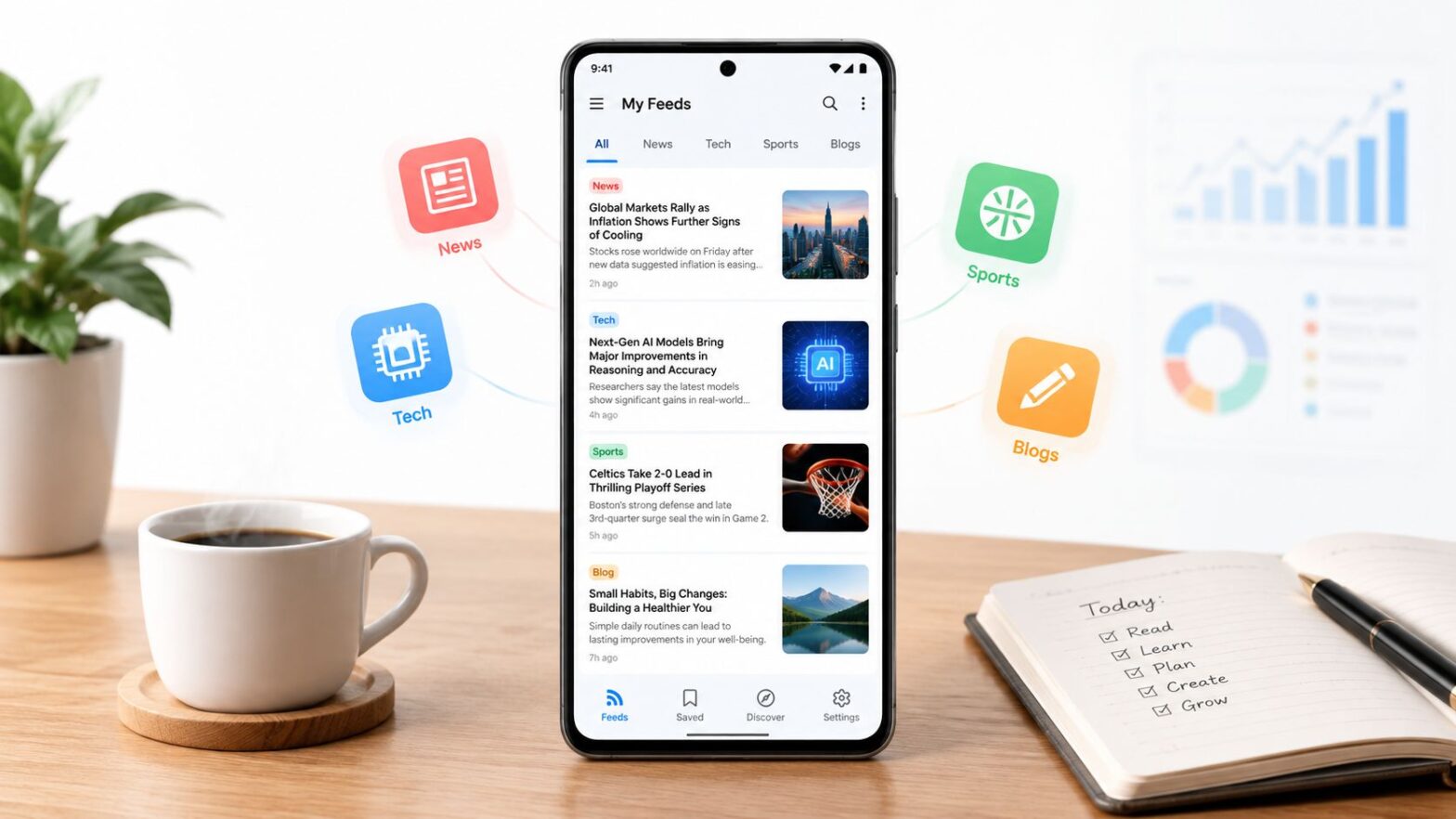
Android represented 68.24% of worldwide mobile operating-system share in February 2026, making compatibility and background behavior central to any Android RSS recommendation. For most non-technical users, Feedly is the safest default, while Inoreader, FeedMe, Read You, or a self-hosted option may be better for automation, offline reading, or data ownership.
Popularity alone doesn't identify the best RSS reader Android users should install. A large user base may indicate polished onboarding, but it won't tell you whether an app preserves unread states, caches full articles, survives Android background restrictions, imports OPML cleanly, or keeps your reading history away from a hosted account.
RSS itself predates Android. Netscape released RSS 0.90 in March 1999, followed by RSS 0.91 in July 1999, RSS 1.0 in December 2000, and RSS 2.0 in September 2002. During the blogging boom, Syndic8.com grew from about 2,500 feeds in mid-2001 to 286,000 in January 2005, then indexed 546,069 feeds by August 2008, including RSS and Atom feeds (historical RSS milestones).
That history explains why a good reader should handle more than headlines. Look for dependable syncing, discovery, filtering, offline reading, full-text fallback, privacy controls, backend flexibility, integrations, and long-term maintenance. For testing, Read More Info's WordPress feed and comments feed provide a practical pair, one for posts and one for discussion updates.
The ten apps below are ranked by the reading problem they solve, not by a universal score. Before the list, one practical distinction matters: an RSS reader is part of a broader tool stack. People searching for free office tools, free tools, free AI tools online, free OCR tools, free editing tools for videos, free tools for video editing, free daemon tools, free zip tools, free pro tools download, pro tools free download, free keyword tools, free keyword tool, free tools like Photoshop, free budgeting tools, free humanizer tools, free tools online, free wireframe tools, free BI tools, free visualization tools, free writing tools, free drawing tools, free CRM tools, or free map tools usually need the same thing from RSS: a clear, manageable way to monitor trusted sources without surrendering control of the reading queue.
Table of Contents
- 1. Feedly
- 2. Inoreader
- 3. NewsBlur
- 4. Feeder
- 5. FeedMe
- 6. FocusReader
- 7. Fluent Reader Lite
- 8. Read You
- 9. Readwise Reader
- 10. Nextcloud News
- Top 10 Android RSS Readers, Feature Comparison
- Choose the Reader You Will Actually Maintain
1. Feedly
Feedly is the safest general recommendation because it removes the most friction between installing an Android app and reading useful sources. Its onboarding is polished, subscriptions can begin from the web or mobile app, and browser extensions make it easy to capture a site while researching topics such as WordPress blog creation.
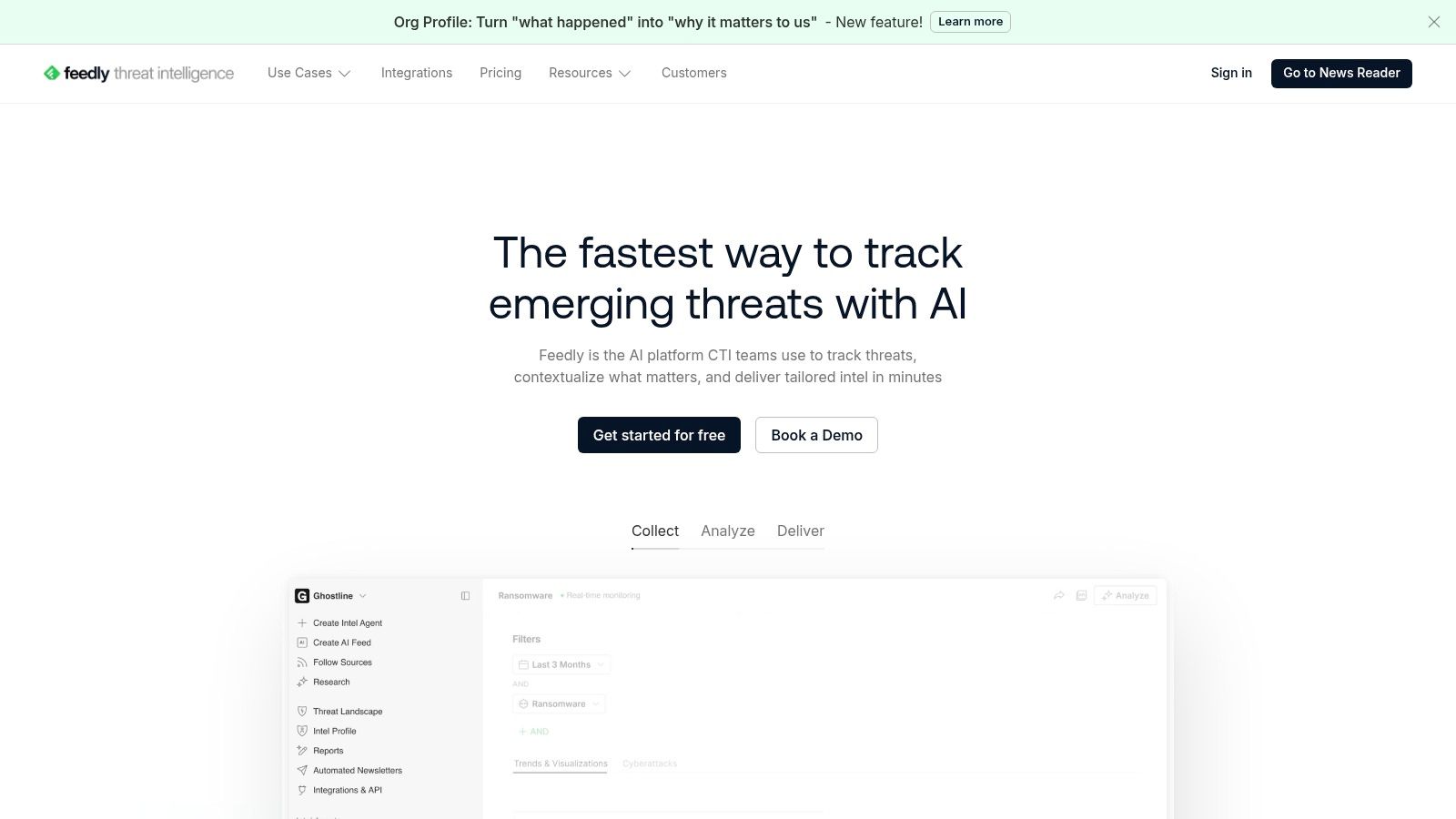
The strongest case for Feedly is simple cross-device continuity. It offers OPML import and export, a mature Android client, a web interface, browser extensions, and integrations with Zapier, IFTTT, Evernote, Pocket, and OneNote. Its discovery layer also suits readers who know the subject they want to follow but don't yet have a list of individual publishers.
The trade-off is that Feedly's most useful filtering and AI capabilities sit on higher tiers. AI Feeds, Mute Filters, RSS Builder, and Leo-style workflows aren't the reason to choose the free experience. Some free-tier users may also find item retention and advertising less comfortable than a local reader.
Best fit: Choose Feedly if you want a dependable hosted account, easy discovery, and the least demanding setup.
Feedly won't satisfy someone who wants local-only storage or deep backend control. For a non-technical Android user who reads across a phone and browser, though, it is the default that is least likely to create setup fatigue.
2. Inoreader
Inoreader solves a different problem: too much information arriving from too many places. Its Android app is useful on its own, but the value appears when you build rules, filters, keyword monitoring, newsletter ingestion, and output feeds around a larger research workflow.
The free tier supports 150 sources, while Pro supports up to 2,500 sources. Those limits are documented in the supplied comparison material, but the important practical distinction isn't the ceiling. It's whether you need the reader to make decisions before you open the app.
Where Inoreader earns its complexity
Inoreader can create web feeds for sites without usable RSS, ingest newsletters, follow Google News alerts, extract fuller article content, translate text, and provide text-to-speech. It also supports automation through Zapier, IFTTT, and n8n, with output feeds and an API for more controlled workflows. You can monitor YouTube, Telegram, and Bluesky alongside traditional RSS sources.
That power introduces a learning curve. A casual reader may spend more time configuring rules than reading articles, and advanced features require a Pro subscription. The interface also rewards users who understand folders, filters, tags, and automation triggers.
For a site owner researching WordPress blog layouts, Inoreader can separate design sources, competitor updates, comments, and newsletters into distinct streams instead of mixing everything into one unread count.
Best fit: Pick Inoreader when filtering, monitoring, automation, and source expansion matter more than simplicity.
It is the strongest option for a researcher, editor, or marketer who wants RSS to behave like an information operations layer. It isn't the best first app for someone who only wants a calm list of favorite blogs.
3. NewsBlur
NewsBlur is the independent alternative for readers who want a serious hosted service without defaulting to the biggest brands. Its defining feature is trainable filtering. You can teach the service what matters by title, author, tags, and full-text content, which is more useful than a simple folder system when a publication produces many kinds of stories.
The Android and iOS apps support offline reading and saved stories. NewsBlur can also create web feeds for sites that don't publish RSS and handle newsletters, extending its usefulness beyond standard feed URLs.
Why experienced readers choose it
NewsBlur feels more like a tool for people who have already developed a reading method. Its interface is denser than Feedly's, and the extra controls won't appeal to everyone. In exchange, users get thoughtful power features, active development, and an open-source server option for self-hosting.
The self-hosting route changes the responsibility model. You gain more control over the service and its data, but you also take responsibility for deployment, updates, backups, and availability. That makes NewsBlur a particularly good bridge between hosted convenience and ownership, rather than a purely local Android reader.
Its advanced tiers may cost more than basic competitors, so value depends on whether trainable filtering and self-hosting solve a real problem. If you only follow a small set of feeds, the extra depth may remain unused.
Best fit: Use NewsBlur if you want trainable filters, saved stories, and a credible path toward self-hosting.
NewsBlur is less immediately obvious than Feedly, but it rewards readers who want the feed queue to learn their editorial priorities.
4. Feeder
Feeder from feeder.co is a lightweight hosted reader for alerts and monitoring. It should not be confused with the open-source NoNonsenseApps Feeder project. This service uses accounts, supports notifications, and offers cross-device access through Android, iOS, web, and browser extensions.
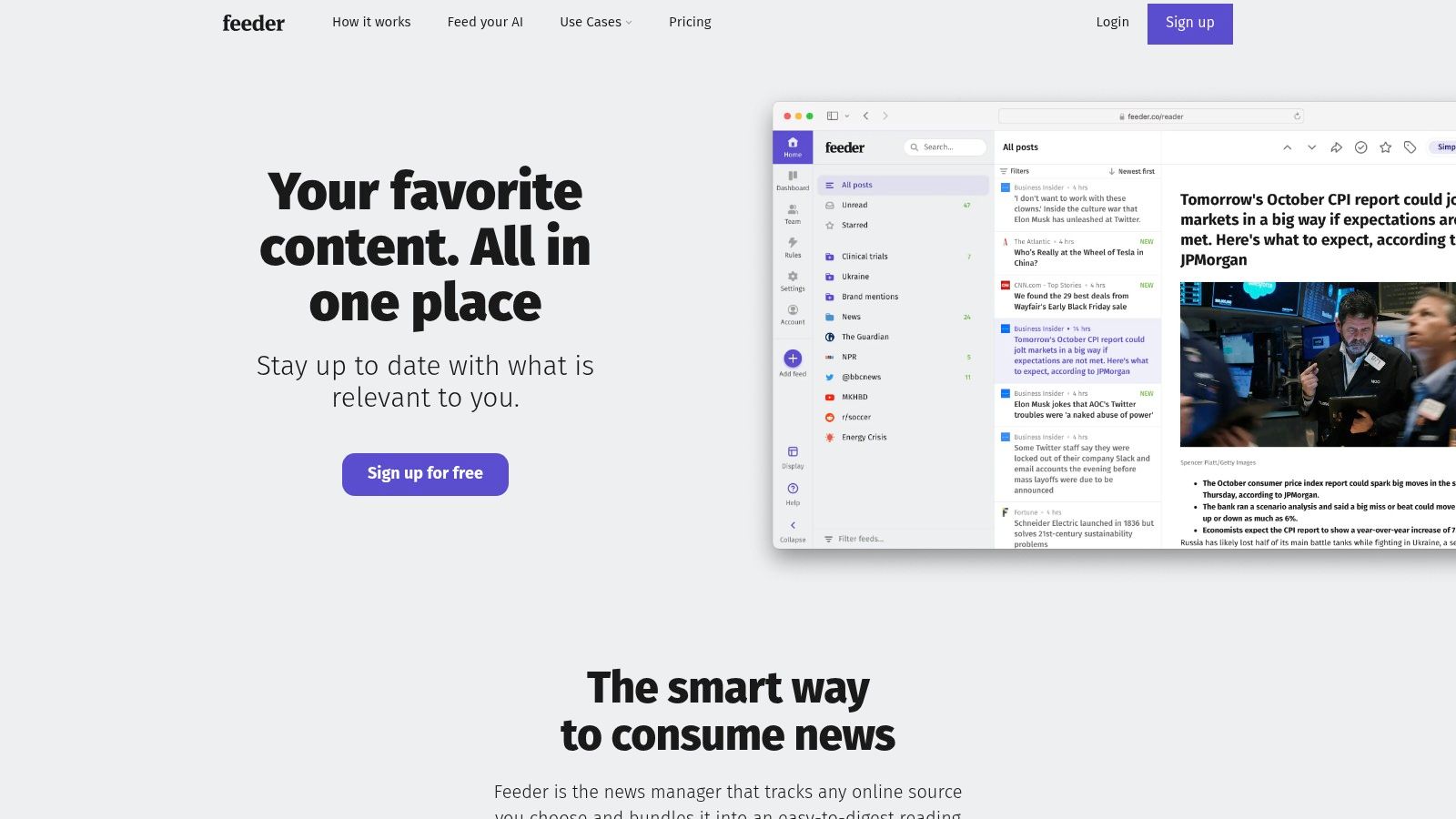
Feeder follows RSS feeds, YouTube channels, subreddits, and Google News searches. Its background updates and push notifications suit users who need to notice a new mention or announcement rather than process a large reading backlog. Higher tiers add team sharing and monitoring options, which makes the service more relevant to small editorial or marketing teams.
The interface is deliberately uncomplicated. That helps when you want to add a source quickly and check updates without learning a complex rule language. It also means the service has less depth than Inoreader for extensive filtering, output feeds, or elaborate automation.
Feeder's community and ecosystem are smaller than Feedly's or Inoreader's, so tutorials and third-party workflow examples may be harder to find. Advanced capabilities also require a paid plan.
For publishers exploring content distribution with RSS feeds, Feeder works well as an alert surface. It can show when a site publishes, a channel updates, or a search produces a relevant result.
Best fit: Choose Feeder when you want simple monitoring, fast notifications, and a clean cross-device service.
It isn't the right pick for readers whose main priority is local storage or self-hosted synchronization. Its strength is operational awareness, not maximum ownership.
5. FeedMe
FeedMe is the most practical choice for offline-first Android reading and backend flexibility. It can run as a standalone local reader or connect to services such as FreshRSS, Tiny Tiny RSS, BazQux, Inoreader, and The Old Reader through compatible APIs.
Its full-content fetching, readability mode, and offline caching are the features that matter during a commute, on unreliable mobile data, or when a publisher's feed contains only short excerpts. FeedMe also offers podcast playback, text-to-speech, per-feed styling, gestures, and mark-as-read-on-scroll behavior. Sync options include Google Reader and Fever APIs, which gives it unusually broad reach across hosted and self-hosted systems.
The app favors power users. You may need to understand the difference between local subscriptions and server-managed subscriptions, and a self-hosted setup can require extra configuration. That isn't a flaw if you already run FreshRSS or another backend, but it can make FeedMe feel less welcoming than Feedly.
A reported comparison of 12 Android RSS clients measured one leading 4.7-star app at 217 MB of RAM and 4.83 seconds to reach the first paragraph during background synchronization, describing it as more than 2.6 times slower than FeedMe. Because that report is a secondary technology article rather than a transparent benchmark, treat those figures as test targets, not universal results (reported Android RSS performance comparison).
Best fit: Install FeedMe when offline caching and backend choice matter more than beginner-friendly presentation.
6. FocusReader
FocusReader is for users who want a polished Android reading surface on top of an existing backend. It can operate locally or synchronize with Feedly, Inoreader, FreshRSS, Tiny Tiny RSS, BazQux, Feedbin, The Old Reader, and Fever-compatible services.
The app's reading controls are its main advantage. Readability and full-text extraction, per-feed settings, gestures, podcast support, translations, and multiple layouts let you shape the screen around how you consume articles. OPML import also makes it easier to start with an existing collection rather than rebuild subscriptions manually.
A strong middle ground
FocusReader occupies the space between a simple hosted reader and a technical local client. You can keep the backend that already contains your subscriptions while using a more Android-native interface, or start in local mode if you don't need multi-device continuity.
The downside is business-model friction. Advanced features such as filters, unlimited accounts, and backups require an optional subscription. Some users also report occasional syncing quirks, so test the app with your actual backend before moving a large collection.
FocusReader is particularly effective when the problem isn't finding feeds but reading them comfortably on a phone. It gives more attention to typography, gestures, media handling, and article extraction than a service designed primarily around web discovery.
Best fit: Try FocusReader if your reading comfort matters most and you already use, or may later adopt, a compatible sync service.
It won't deliver the same turnkey ecosystem as Feedly, but it gives Android reading a more deliberate, configurable feel.
7. Fluent Reader Lite
Fluent Reader Lite is the mobile companion for people who already use Fluent Reader on desktop and want a minimal Android front end for a self-hosted workflow. It connects through the Fever API, Google Reader API, and Inoreader, rather than offering native Feedly integration.
Pairing matters more than discovery
The app supports Fever-compatible services including FreshRSS, Miniflux, and a Tiny Tiny RSS plugin. QR-based configuration import and export makes pairing with the desktop Fluent Reader straightforward, especially when you don't want to type server details and credentials on a phone.
Its design is fast and restrained. Open-source development and frequent releases appeal to users who want a small client without a large hosted ecosystem layered around it. Local mode is also available, but the app's strongest identity is as a companion to an existing service.
That dependency is the central limitation. You need a backend for convenient synchronization, and users expecting to sign in to Feedly may find the missing integration decisive. Fluent Reader Lite is not trying to be a discovery platform or an all-in-one research system.
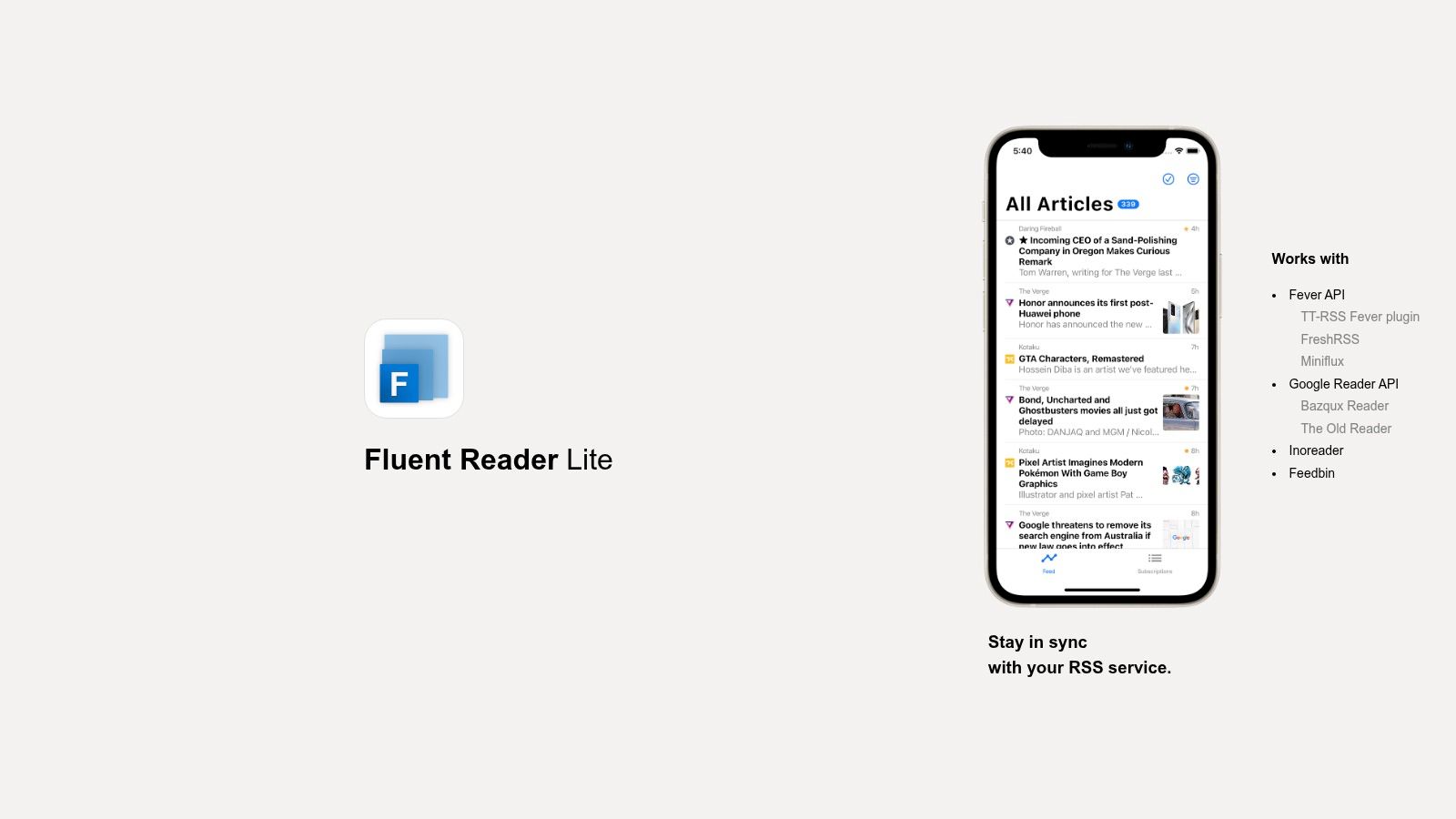
Best fit: Choose Fluent Reader Lite when your priority is a quick, open-source Android companion for a Fever or Google Reader API backend.
8. Read You
Read You is the best match for a lightweight, local, open-source Android reading experience. Its Material You design feels native to current Android conventions, but its more important advantage is that local mode doesn't require an account.
The app supports OPML import, article extraction, offline reading, and text-to-speech. It can also synchronize with compatible self-hosted services through Fever and Google Reader API implementations, including setups based on FreshRSS.
Local first, sync when needed
Read You works well for someone who wants to collect a controlled set of feeds directly on the phone. Local reading keeps the architecture simple and avoids vendor account dependency, but it also means you won't automatically carry unread states and saved articles across devices unless you configure a compatible backend.
That trade-off is intentional. Read You offers fewer turnkey cloud features than Feedly or Inoreader, and its synchronization capabilities depend on the backend you choose. Users who need newsletter ingestion, advanced web scraping, or extensive automation should look elsewhere.
Accessibility deserves a place in this comparison. An empirical study of more than 13,000 Android apps found that over 97% didn't use accessibility APIs, while 36.96% had no labeled elements at all (Android accessibility study.pdf)). Test whether titles, unread controls, article navigation, text size, and sharing work predictably with TalkBack instead of assuming a clean visual design guarantees an accessible reading flow.
Best fit: Install Read You if you want an attractive local reader with open-source code and no account in its basic mode.
9. Readwise Reader
Readwise Reader is not primarily a traditional RSS client. It is a knowledge-management inbox that combines RSS with newsletters, web clips, PDFs, EPUBs, YouTube, highlights, and annotations.
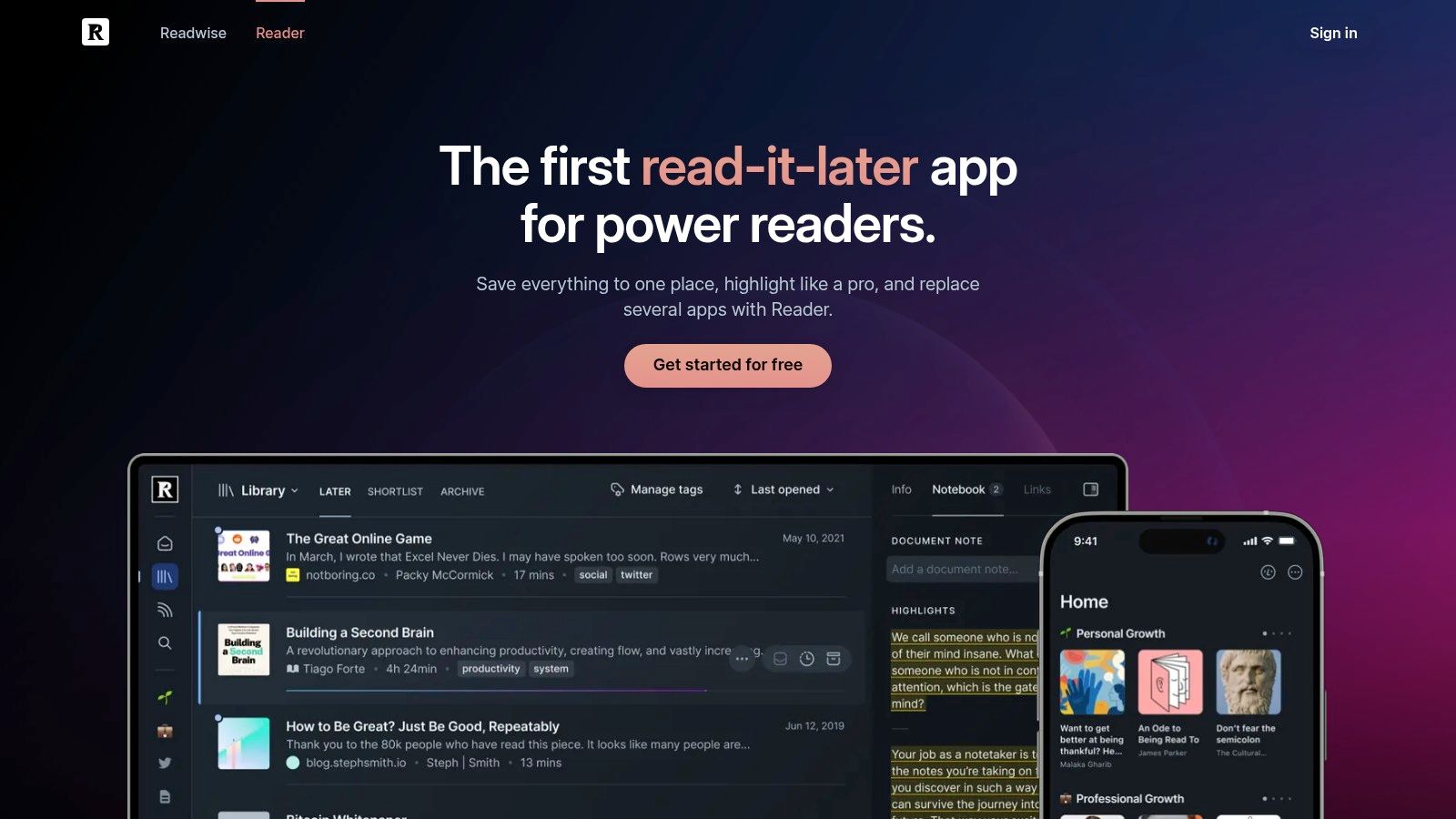
That distinction matters. If your process is “scan headlines, mark a few read, and move on,” Readwise Reader may feel like unnecessary machinery. If your process is “save research, highlight passages, revisit ideas, and send notes to a knowledge base,” it can replace several disconnected tools.
The service provides full-text search, text-to-speech, AI Ghostreader tools, and synchronization across web, desktop, iOS, and Android. Exports and integrations with Obsidian, Notion, Roam, and similar systems support a longer research cycle than a conventional unread queue.
Its weakness is cost and focus. You need a paid Readwise subscription after the trial, and the interface is built around saving and processing material rather than maintaining a minimalist chronological feed. It also creates a stronger dependency on a hosted knowledge workflow, so export behavior should be part of your evaluation.
Read More Info's broader blog is a suitable source to add when you want to test how ordinary WordPress posts behave inside a research-oriented inbox.
Best fit: Use Readwise Reader if RSS is one input into a highlighting, annotation, and personal knowledge workflow.
10. Nextcloud News
Nextcloud News is the clearest choice when data ownership and self-hosting matter most. The Android client connects to a self-hosted Nextcloud News server, giving you a feed workflow that can live alongside files, calendars, notes, and other Nextcloud services.
It supports offline reading, notifications, and OPML import. The open-source project also maintains a visible changelog and releases through GitHub, which helps users assess whether the software remains maintained instead of relying only on an app-store listing.
Ownership has a maintenance cost
The benefit is straightforward. You don't need a third-party RSS cloud to hold your subscriptions, reading history, or cached articles. You control the server environment and can choose whether to self-host directly or use a hosted Nextcloud provider.
The limitation is equally clear. You need a working Nextcloud instance, and that introduces updates, backups, server availability, and troubleshooting. Discovery and AI features are less extensive than those found in hosted services such as Feedly or Inoreader.
Privacy claims should also be concrete. A reader may store feed URLs, reading history, search terms, authentication tokens, and article content locally, remotely, or across both locations. Cloud sync improves convenience, but it can create account dependency and expose behavioral data. A 2025 report citing Yahoo/Ipsos research found that only 12% of U.S. internet users were aware of RSS and 4% knowingly used it, while 27% consumed RSS-powered personalized pages without recognizing the technology (RSS awareness report). That unfamiliarity makes plain-language privacy explanations more important than vague “private” labels.
Best fit: Choose Nextcloud News when your existing infrastructure already centers on Nextcloud and you want the RSS data under your control.
Top 10 Android RSS Readers, Feature Comparison
| Reader | Core features ✨ | UX / Quality ★ | Price / Value 💰 | Target audience 👥 | Standout 🏆 |
|---|---|---|---|---|---|
| Feedly | One‑tap subscribe, OPML, web client, Leo AI (paid) | ★★★★ Polished Android & discovery | 💰 Free + paid AI tiers | 👥 Casual readers who want easy cross‑device sync | 🏆 Large integrations & discovery |
| Inoreader | Granular filters/rules, web‑scrape, API | ★★★★ Fast, powerful for workflows | 💰 Free (limited) → Pro for automation | 👥 Power users & automation fans | 🏆 Deep filtering & outputs |
| NewsBlur | Trainable filters, web feeds, self‑host option | ★★★★ Feature‑rich; denser UI | 💰 Free + paid Pro / self‑hostable | 👥 Users wanting independent/self‑hosted service | 🏆 Trainable intelligence & self‑host |
| Feeder (feeder.co) | RSS, YouTube, subreddits, push notifications | ★★★ Simple, lightweight alerts | 💰 Freemium; paid for advanced/team features | 👥 Monitoring & alert-focused users | 🏆 Fast updates + team sharing |
| FeedMe | Full‑content fetch, robust offline, podcast support | ★★★★ Excellent offline & customization | 💰 Free / open‑source (donations) | 👥 Offline readers & multi‑backend users | 🏆 Best offline & multi‑service sync |
| FocusReader | Local mode or multi‑service sync, layouts | ★★★★ Clean UI with deep customization | 💰 Free + optional subscription for pro features | 👥 Users wanting a polished client for existing backends | 🏆 Flexible multi‑backend support |
| Fluent Reader Lite | Fever/Google Reader API sync, desktop pairing | ★★★ Fast, minimalist companion app | 💰 Free / open‑source | 👥 Self‑hosters & Fluent desktop users | 🏆 Desktop ↔ mobile pairing & self‑host focus |
| Read You | Local reading, Material You, TTS, F‑Droid build | ★★★★ Lightweight, attractive UI | 💰 Free / open‑source | 👥 Privacy‑minded Android users | 🏆 Native Material You + F‑Droid availability |
| Readwise Reader | RSS + newsletters + PDFs, highlights, AI tools | ★★★★★ Excellent for research & notes | 💰 Paid subscription (trial available) | 👥 Knowledge workers / PKM users | 🏆 Unified inbox + export integrations |
| Nextcloud News (Android) | Sync with Nextcloud, OPML, offline | ★★★ Solid offline; integrates with Nextcloud | 💰 Free (requires Nextcloud host) | 👥 Self‑hosters wanting data ownership | 🏆 Full data ownership & privacy |
| Feedly (duplicate) | , | , | , | , | , |
Choose the Reader You Will Actually Maintain
The best RSS reader is the one that fits the way you make reading decisions. Feedly is the sensible general-purpose choice when you want a polished account, simple discovery, and reliable continuity between Android and the web. Inoreader earns its place when your queue needs rules, filters, newsletters, web feeds, output feeds, or automation. FeedMe is better when Android must work offline and your backend is FreshRSS, Tiny Tiny RSS, Inoreader, or another compatible service.
For a local and open-source experience, Read You is easier to justify than a feature-heavy hosted platform. It keeps the basic workflow small and readable, although cross-device sync depends on your backend. Readwise Reader is the specialist pick for research workflows, where articles become highlights, notes, and linked knowledge rather than disappearing after you mark them read.
Self-hosting divides into two practical paths. Fluent Reader Lite suits readers who already have a compatible backend and want a minimal desktop-to-Android pairing. Nextcloud News is the better fit when the RSS service belongs inside a broader Nextcloud installation. NewsBlur offers another route for readers who want trainable filtering with an open-source server option.
Android background behavior deserves real testing. Android held 68.24% of worldwide mobile operating-system share in February 2026, but that platform figure doesn't prove that any particular reader has the largest audience or best app performance (Android platform share context). It does justify checking synchronization on metered data, after background-process suspension, and with notifications disabled or restricted.
Use a short migration process before committing a large feed collection:
- Export subscriptions: Create an OPML file from the current reader, including folders where possible.
- Add a real WordPress feed: Subscribe to Read More Info's post feed and confirm that titles, dates, links, and full-text behavior appear correctly.
- Test discussion separately: Add the comments feed and give it its own folder or tag so comments don't overwhelm article updates.
- Check offline limits: Download full articles, images, and a representative mix of short and long posts before leaving Wi-Fi.
- Test notifications: Confirm that per-feed controls work and that unread states remain consistent after a manual refresh.
- Review ownership: Check whether feed URLs, reading history, search terms, and authentication data stay local, move to a vendor account, or are stored on your own server.
- Verify portability: Import the OPML file into a second reader before cancelling the original service.
If you're choosing between free tools for adjacent work, evaluate the same way. The CFPB provides a free budget worksheet that lets users compare income and spending, categorize expenses, and assess whether monthly cash flow supports savings or debt reduction (CFPB budgeting worksheet explanation). For video work, the free edition of DaVinci Resolve includes editing, color correction, audio post-production, and visual effects without a watermark or time limit, with Ultra HD output up to 3840 × 2160 and 8-bit formats up to 60 frames per second (DaVinci Resolve capabilities). Free AI tools online follow a different model, because no-cost access commonly comes with message, upload, model, or rate limits rather than unlimited professional usage (ChatGPT pricing information).
Start with the smallest setup that solves your actual problem. Choose Feedly for the simplest general-purpose experience, Inoreader for automation, FeedMe for offline-first Android reading, Read You for local open-source use, Readwise Reader for research, or Nextcloud News and Fluent Reader Lite when self-hosting is central. Then test your own feeds, because a ranking cannot predict how a specific publisher's excerpts, images, comments, redirects, or full-text extraction will behave.
Read More Info publishes straightforward WordPress posts and updates with open RSS access for both articles and comments, making it a useful test source for any Android reader. Subscribe to Read More Info and use the site's feeds to verify syncing, offline reading, notifications, and discussion tracking in the app you choose.