RSS and Feed Readers
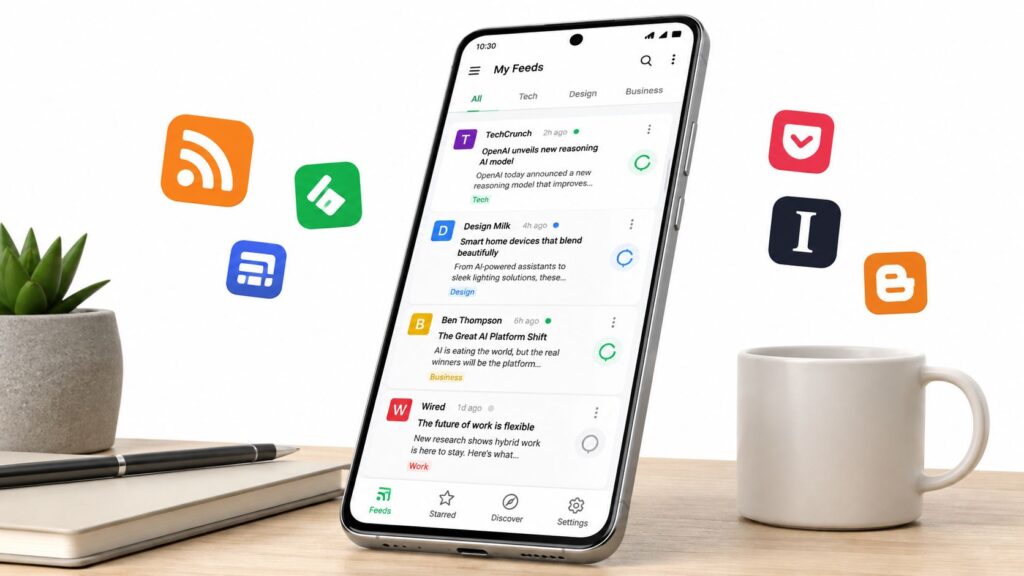
RSS is one of the quiet success stories of the web. A feed is a machine-readable list of the latest updates from a website, such as new articles, podcast episodes or product changes. A feed reader collects those updates in one place, so you can keep up with many sources without visiting each site and without relying on an algorithm to decide what you see.
This guide explains what feeds are, how to find them, how to choose a reader, and how to keep your subscriptions manageable. It is written for people who read a lot online, run a website, or want to stop depending on social media feeds for their news.
WHAT AN RSS FEED ACTUALLY IS
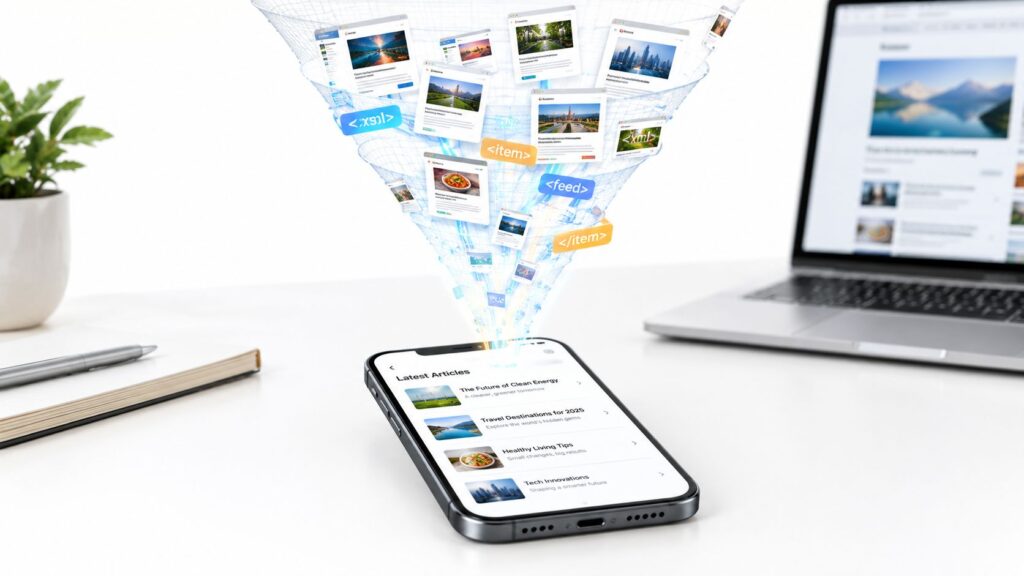
Most websites publish a feed alongside their normal pages. It is written in a structured format that software can read, usually containing the title, link, date and a short summary of each item. Because the format is standard, any compatible reader can display it. Feeds are often called RSS or Atom, and most readers handle both.
Feeds are still widely used. Many blogs, news sites, podcasts and newsletters publish one, and it is often the most reliable way to follow a source that does not have a social media account.
FINDING A FEED
Many sites show an orange RSS icon or a link labeled Subscribe or Feed in the header or footer. If you cannot find one, try adding common paths to the site address. WordPress sites usually respond at the address followed by /feed/. Some sites also publish a feed for each category or section, which lets you subscribe to only the topics you care about.
Your reader can often detect a feed for you. Paste the main address of the site, and the reader will look for the feed link in the page’s code.
CHOOSING A READER
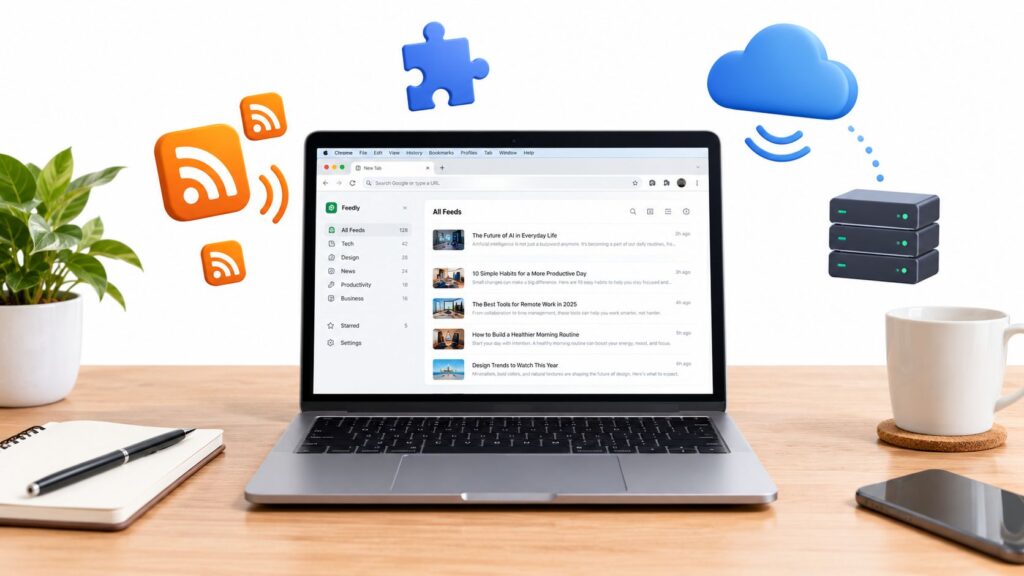
There are three broad types of reader. Browser extensions are the quickest to start with, because they add a button to your toolbar and need no account. Apps on phones and tablets suit reading on the go, and most sync across devices if you sign in. Self-hosted readers run on your own server, which gives you full control over your data but requires some technical work to install and keep updated.
When comparing readers, look at how well they handle folders and tags, whether they offer a read-later function, how they treat full-text versus summary feeds, and whether you can export your subscriptions. Exporting matters because it lets you switch tools without starting from scratch. The OPML file format is the common way to do this.
KEEPING YOUR SUBSCRIPTIONS MANAGEABLE
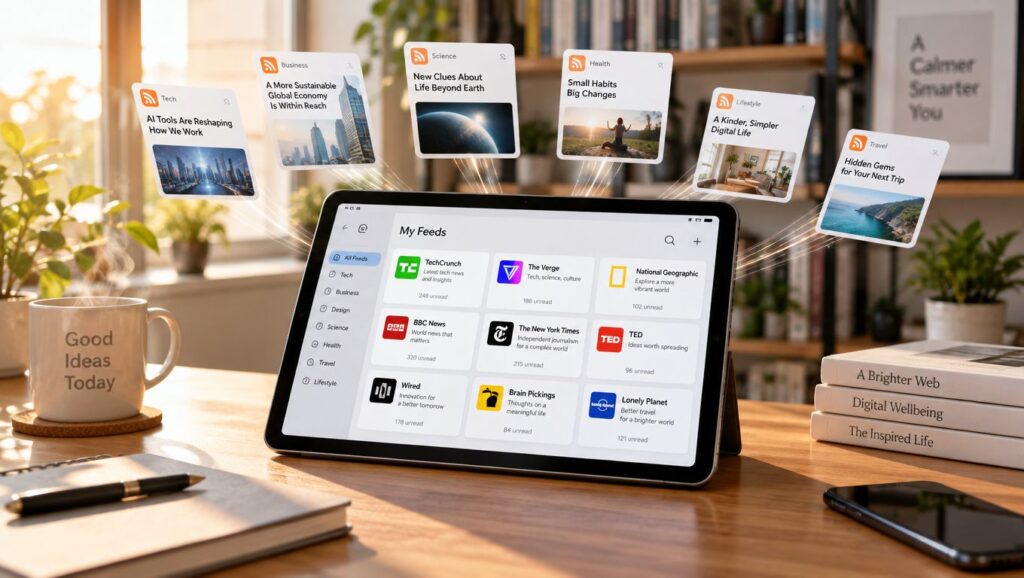
A feed reader makes it easy to subscribe to everything, which quickly becomes overwhelming. Start with a small list of sources you read every week, and add new ones only when you have time for them. Group feeds into folders by topic, and mark items as read when you are done rather than leaving them to pile up. Unsubscribe from sources that no longer interest you. A reader works best when it is a short, useful list.
Pay attention to what a feed contains. Some publish only headlines, which means you have to open the site to read the article. Others publish the full text, which is more convenient but can be harder to recognize as a source.
COMMON MISTAKES
– Subscribing to so many feeds that the list becomes a second inbox.
– Forgetting to export subscriptions before switching tools.
– Trusting a self-hosted reader without keeping it updated.
– Assuming a feed is still active. Some stop updating without notice, so review your list every few months.
FREQUENTLY ASKED QUESTIONS
Is RSS still worth using?
Yes. It gives you a direct, chronological view of the sources you choose, without ranking or ads deciding what you see. Many people use it alongside newsletters and social media.
Do I need an account?
Not always. Some browser extensions work without one. Hosted readers usually ask you to sign in so that your subscriptions sync across devices.
Can I read a feed without installing anything?
Yes. Many browsers display feeds as plain text, and some websites offer a simple reading view. For regular use, a dedicated reader is more practical.
A feed reader is a small tool with a big effect. Choose one that fits how you read, keep your list short, and the web starts to feel more like a set of sources you chose and less like a feed someone else designed.
GO DEEPER: OUR RSS GUIDES
– 10 RSS feed readers free to use in 2026
– What is an RSS feed: the open web guide
– What are RSS readers and how do they work
– RSS feed format example: a practical guide
– 10 feed reader Chrome options for better reading
– 10 feed reader Firefox options compared